
National Emergency Briefing brings Edinburgh councillors together at City Chambers
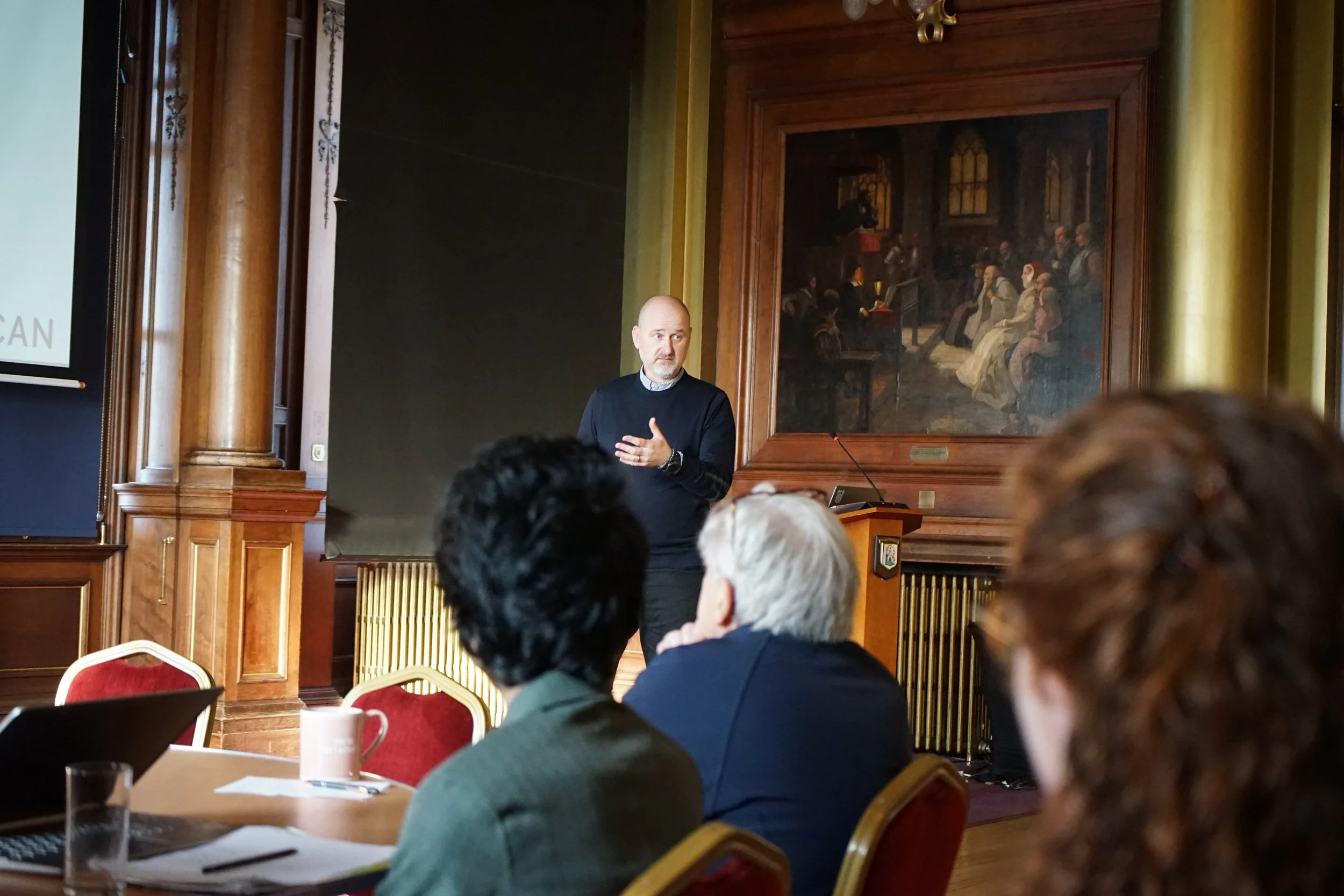
On Wednesday 7 October, councillors gathered at Edinburgh City Chambers for a screening of the National Emergency Briefing, followed by group discussions and a panel exploring what the climate and nature emergencies mean for Edinburgh.
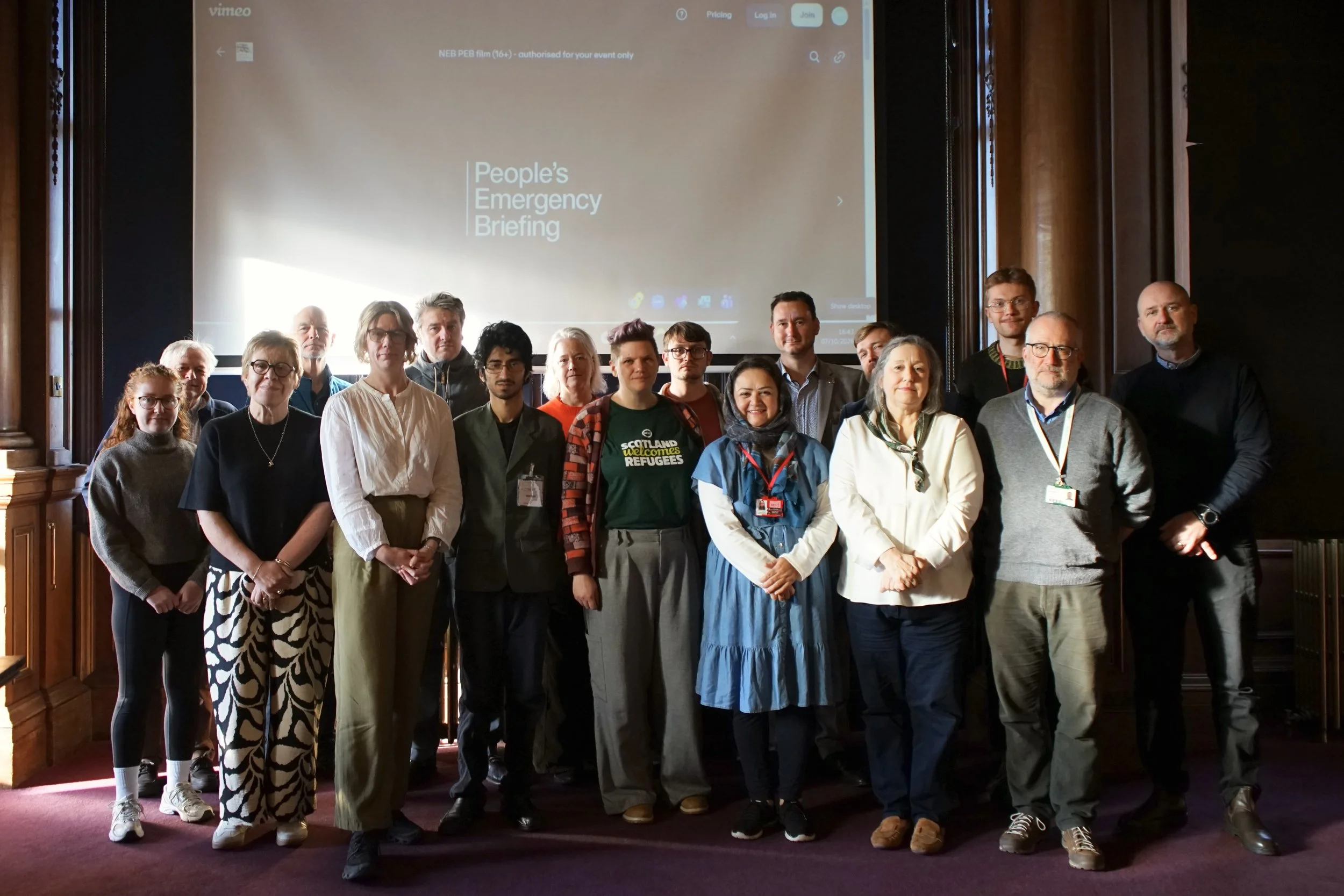
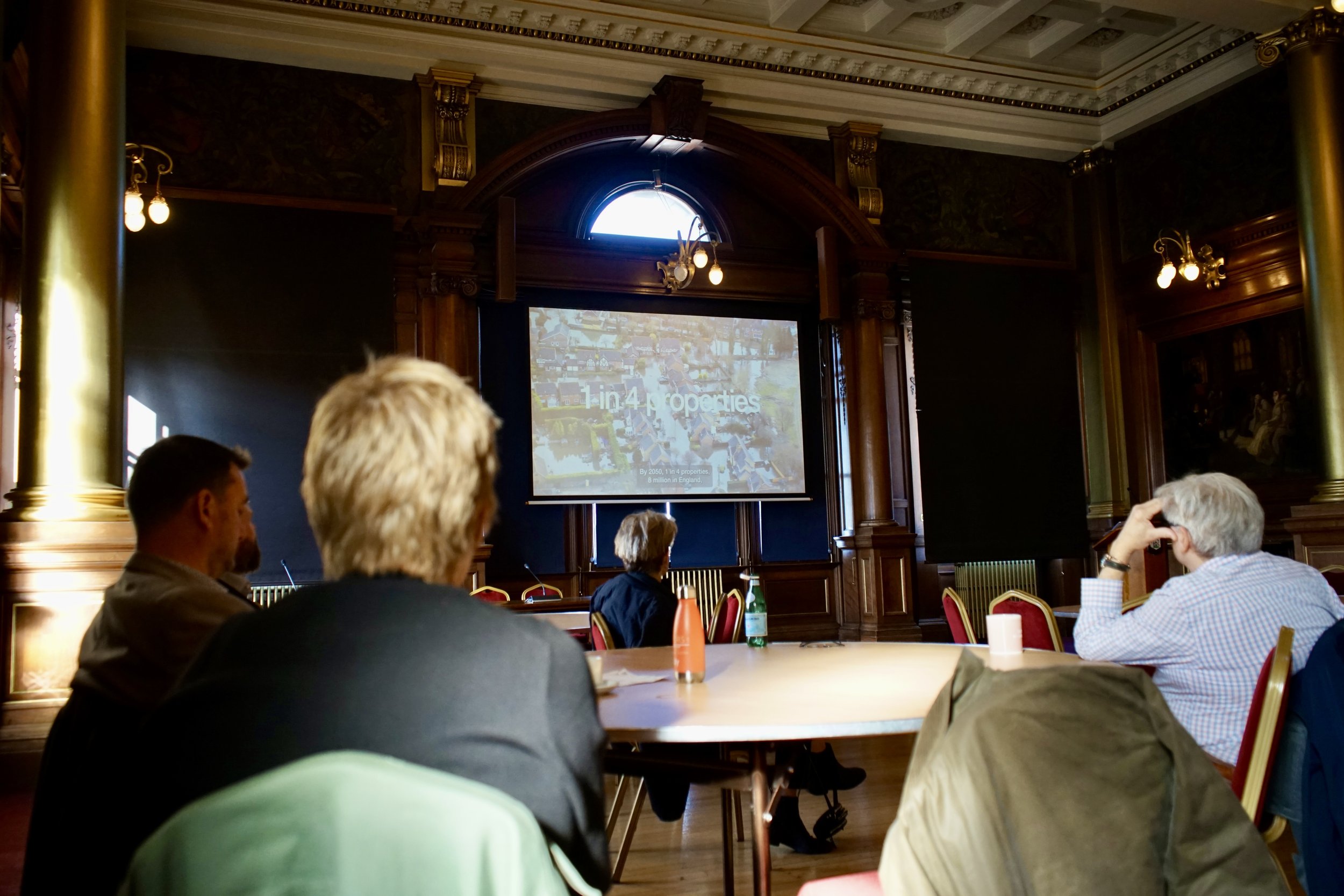
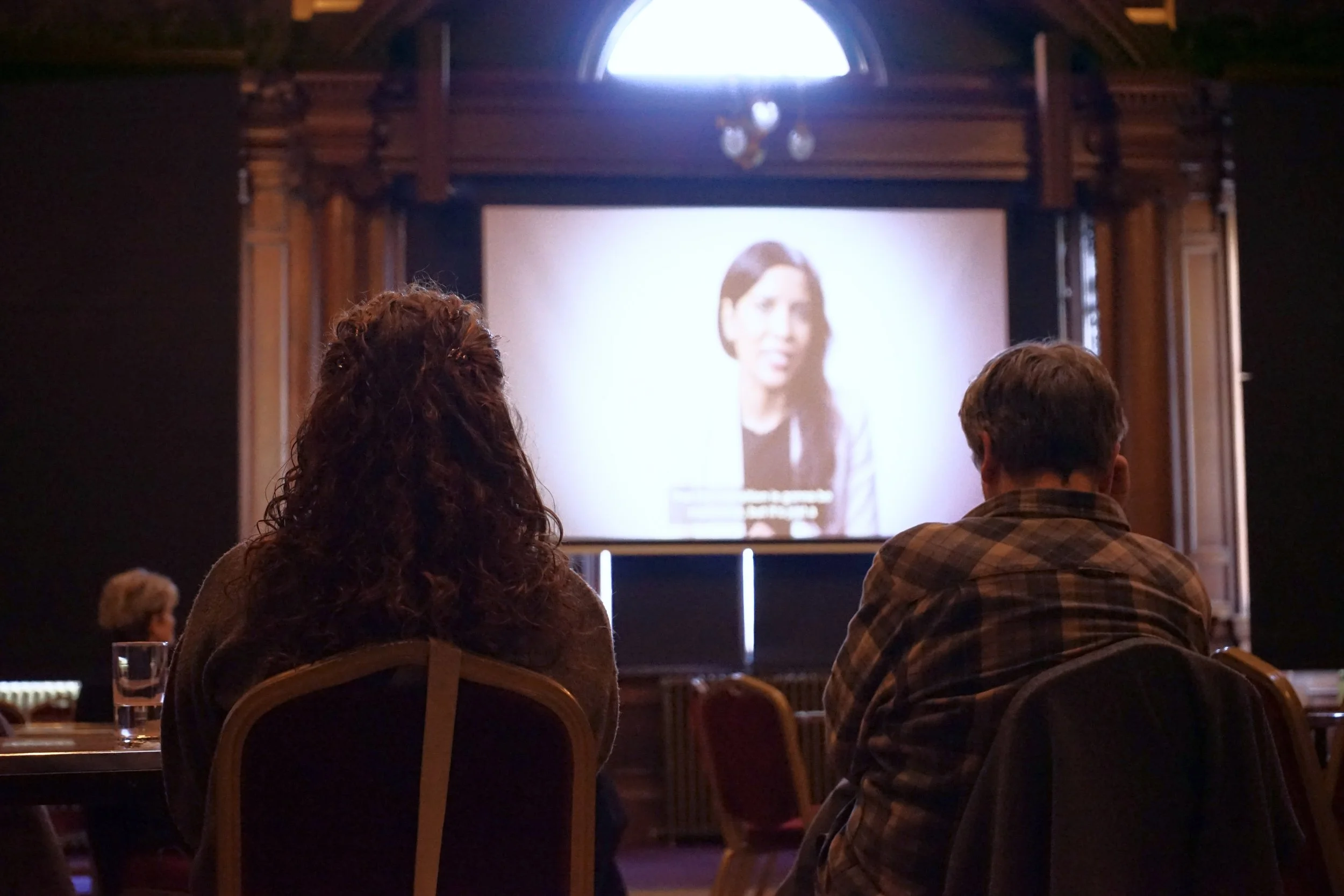
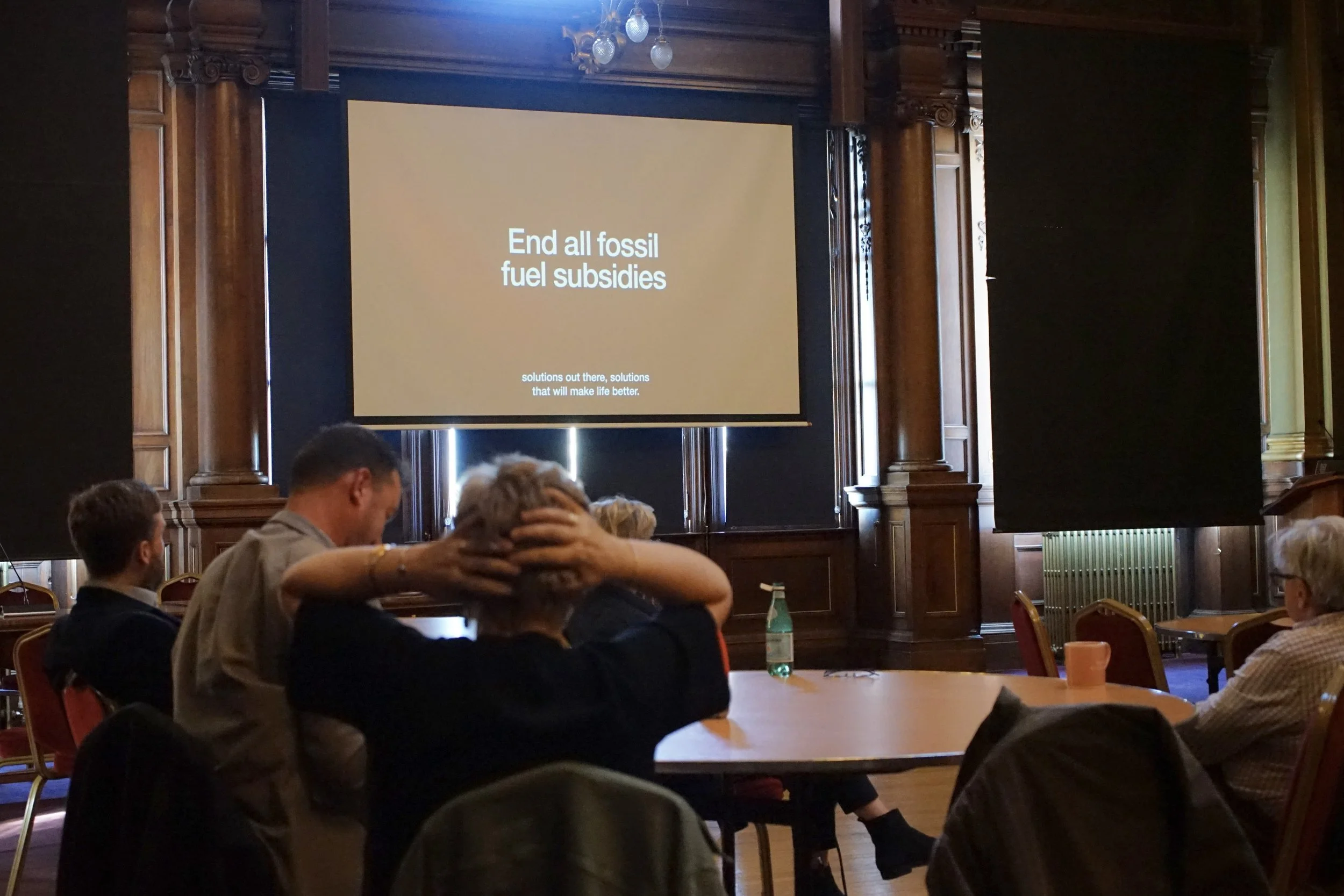
The event was jointly organised by Edinburgh Green and Liberal Democrat councillors, with all 63 of Edinburgh’s councillors invited to attend. ECCAN supported the event by introducing the session, bringing together the panel and facilitating the discussions throughout the afternoon.
The afternoon began with a welcome and introduction from our Network Lead, Mark, before we watched the National Emergency Briefing together.
Presented by ecologist Chris Packham, the film brings together leading scientists and experts to explain the latest evidence on the climate and nature emergencies. It makes some hard-hitting points about the interconnected risks facing the UK, including the effects on our food, health, economy and wider society.
For some of those in the room, this was the first time they had watched the briefing. Others had seen it before but found that different parts resonated on a second viewing.
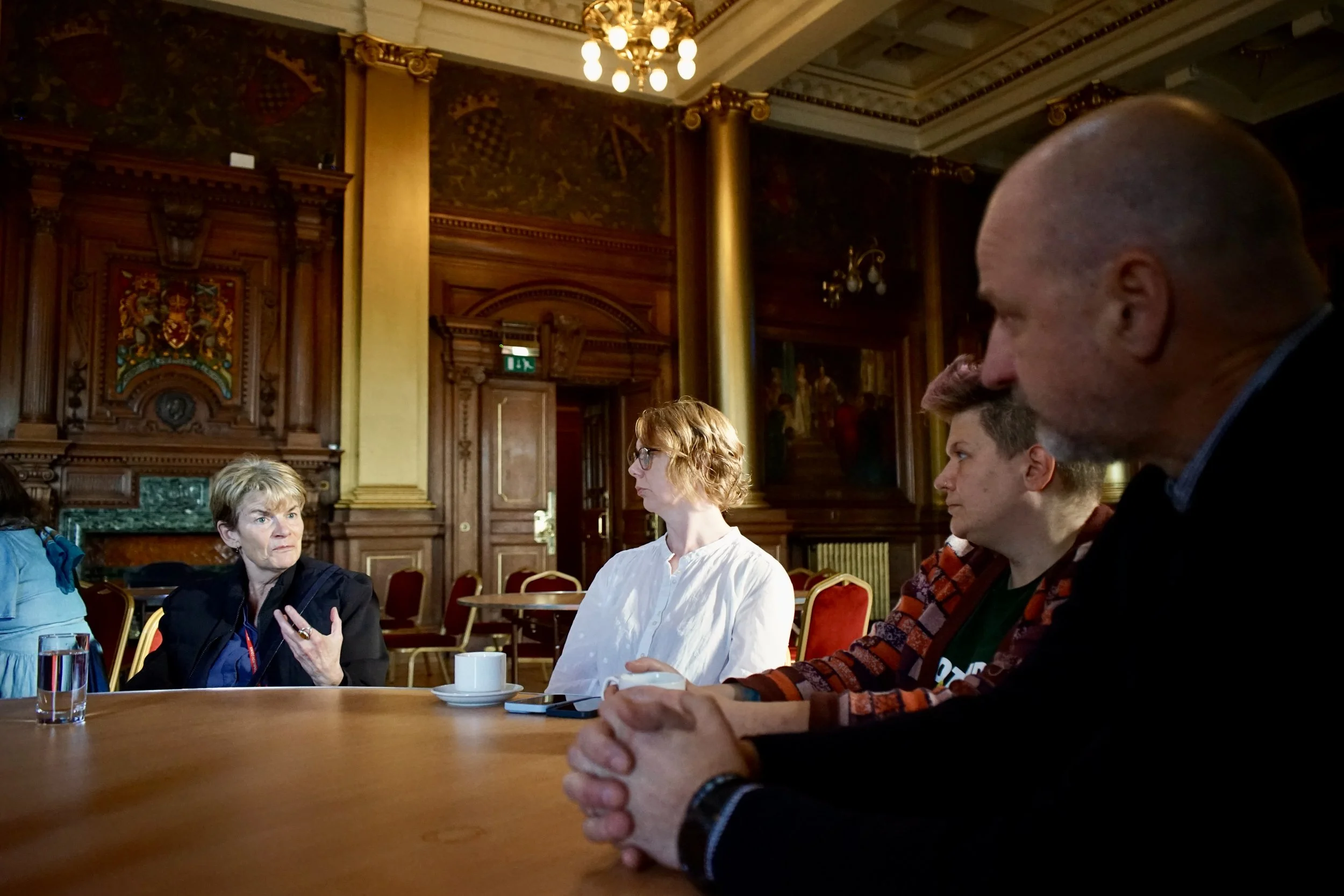
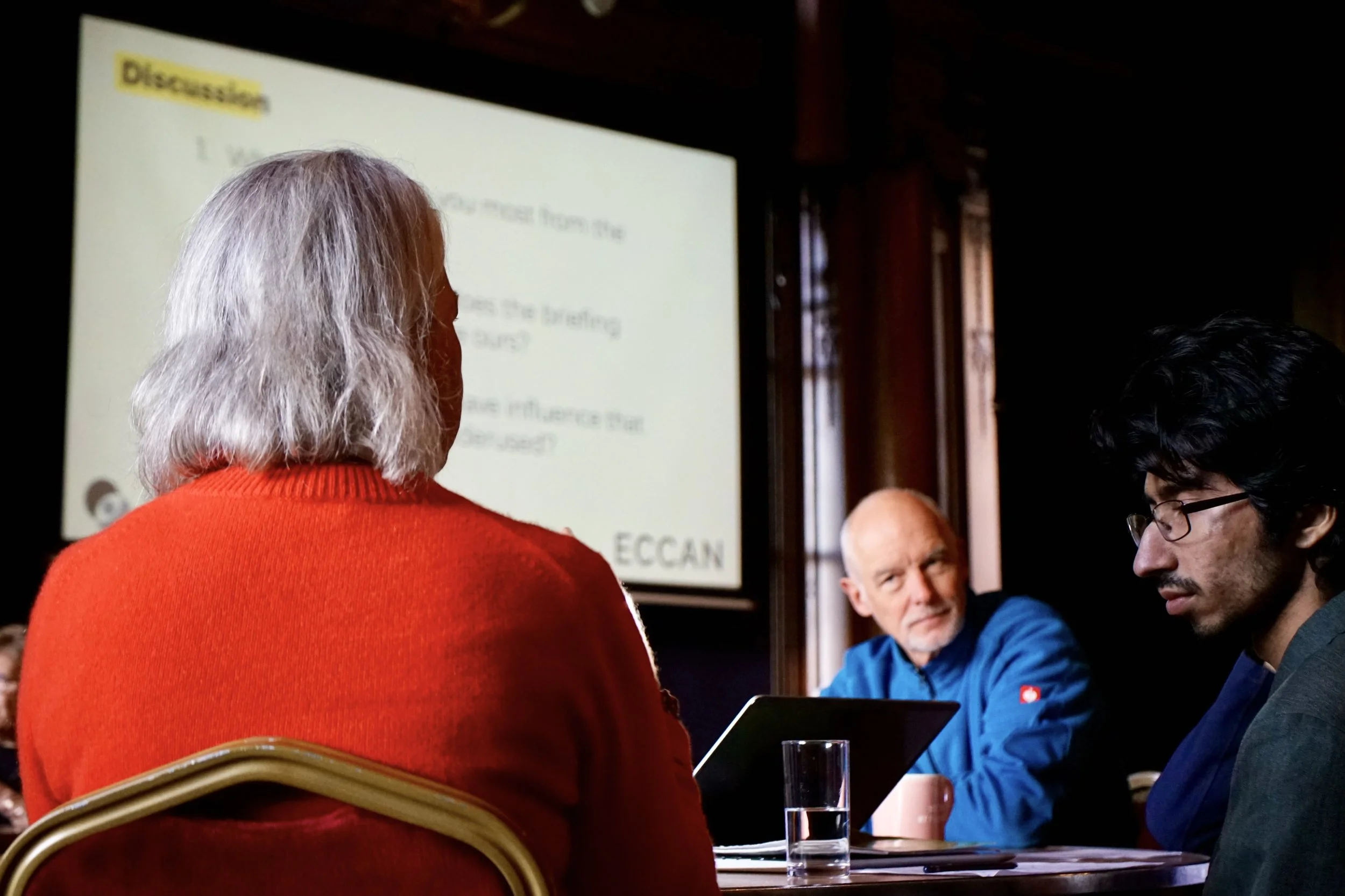
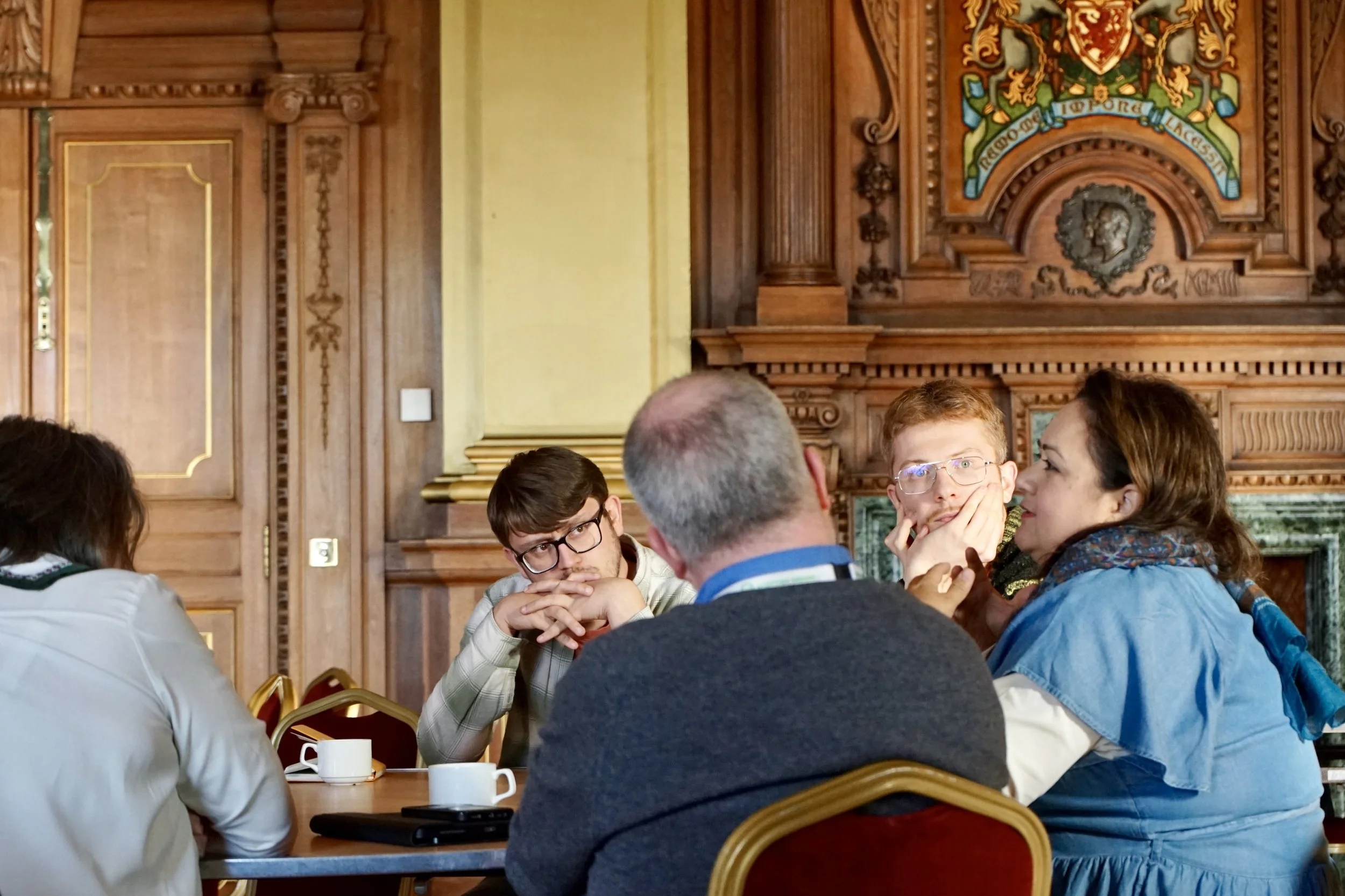
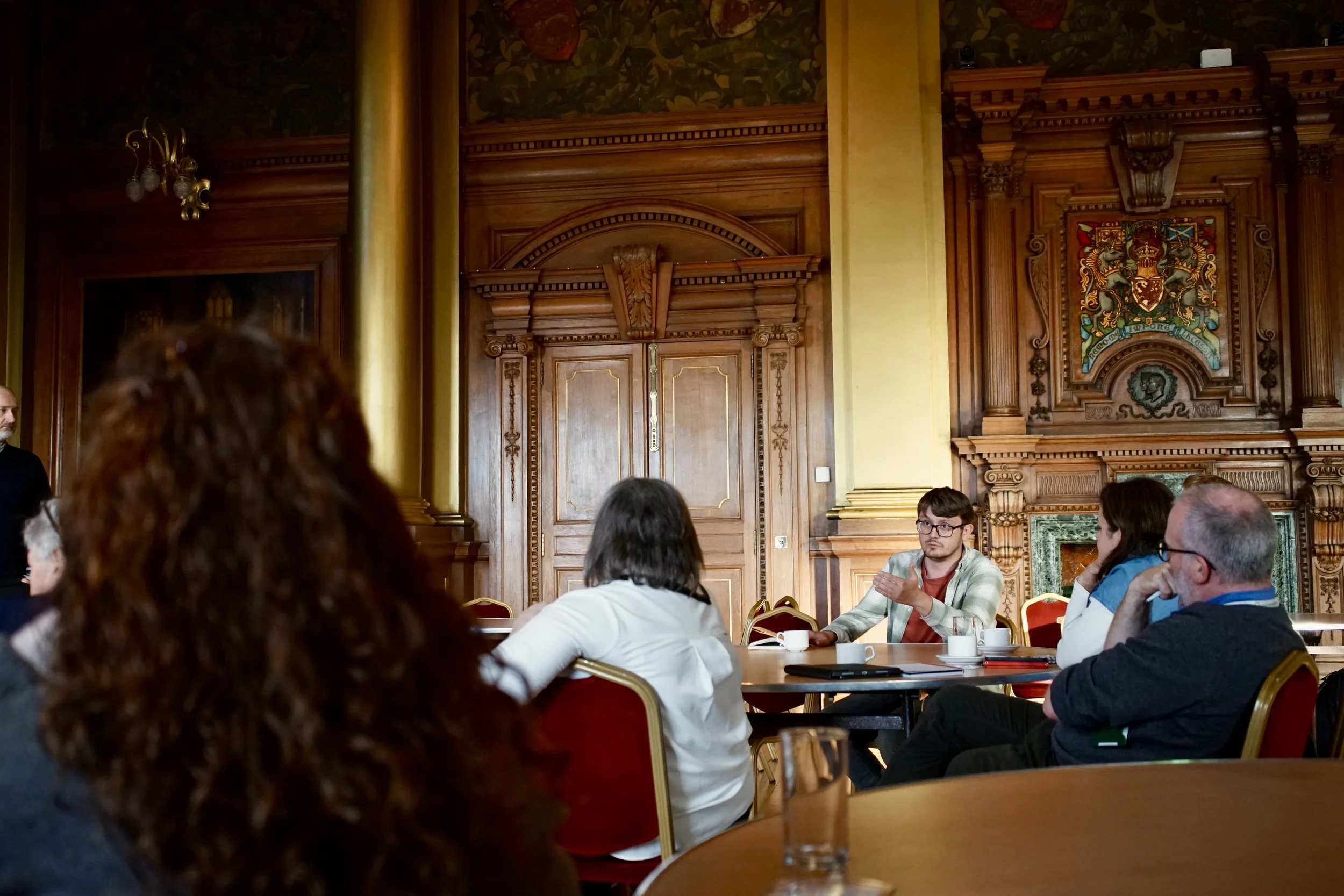
After the film, we broke into smaller groups to discuss what we had heard. Each table reflected on the points that stood out, the questions the film raised and what the evidence might mean for Edinburgh.
These conversations gave everyone an opportunity to process the scale of the issues together. They also began to move the discussion from the national picture towards our local context: what is already happening across the city, where the gaps remain and what councillors, communities and organisations could do next.
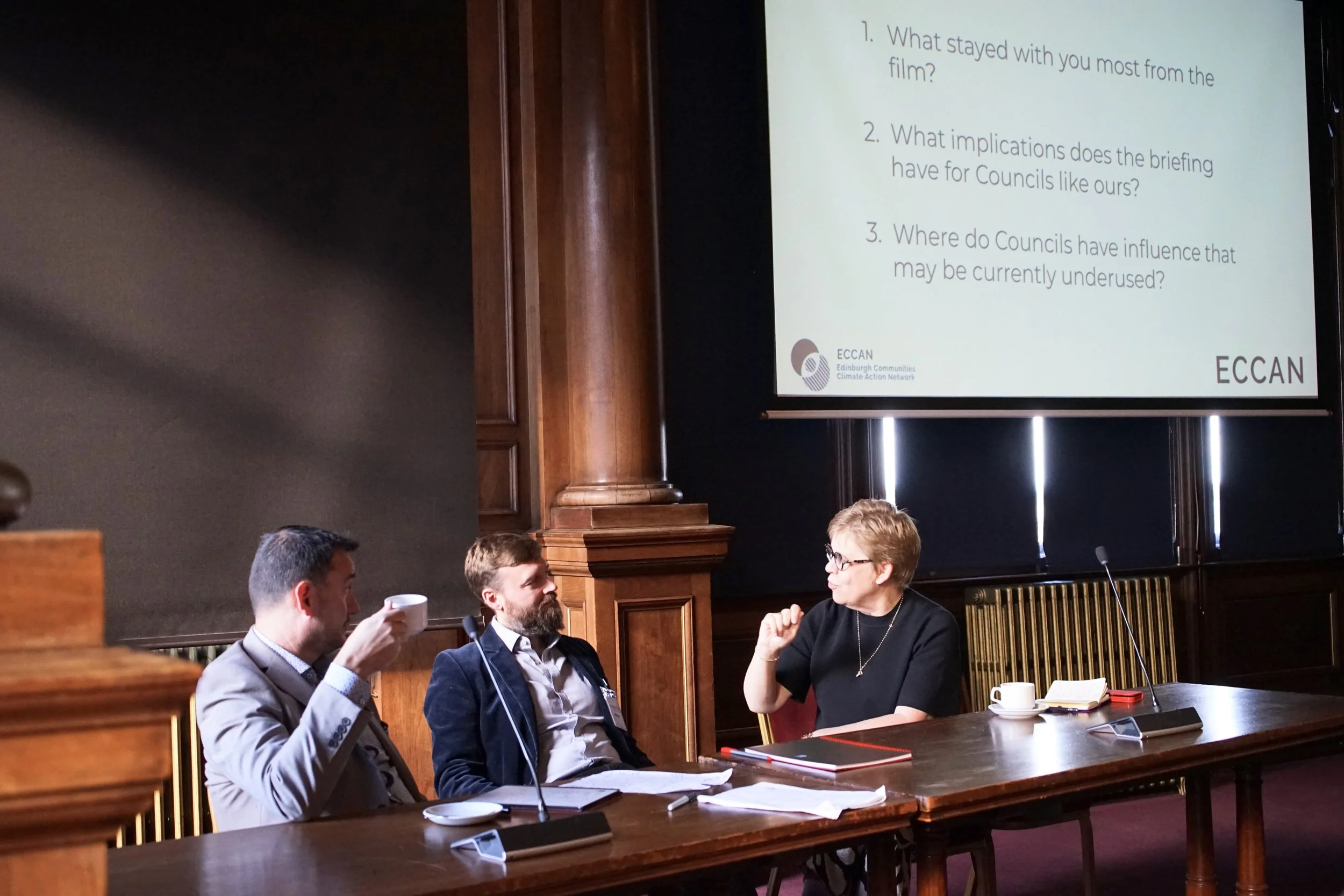
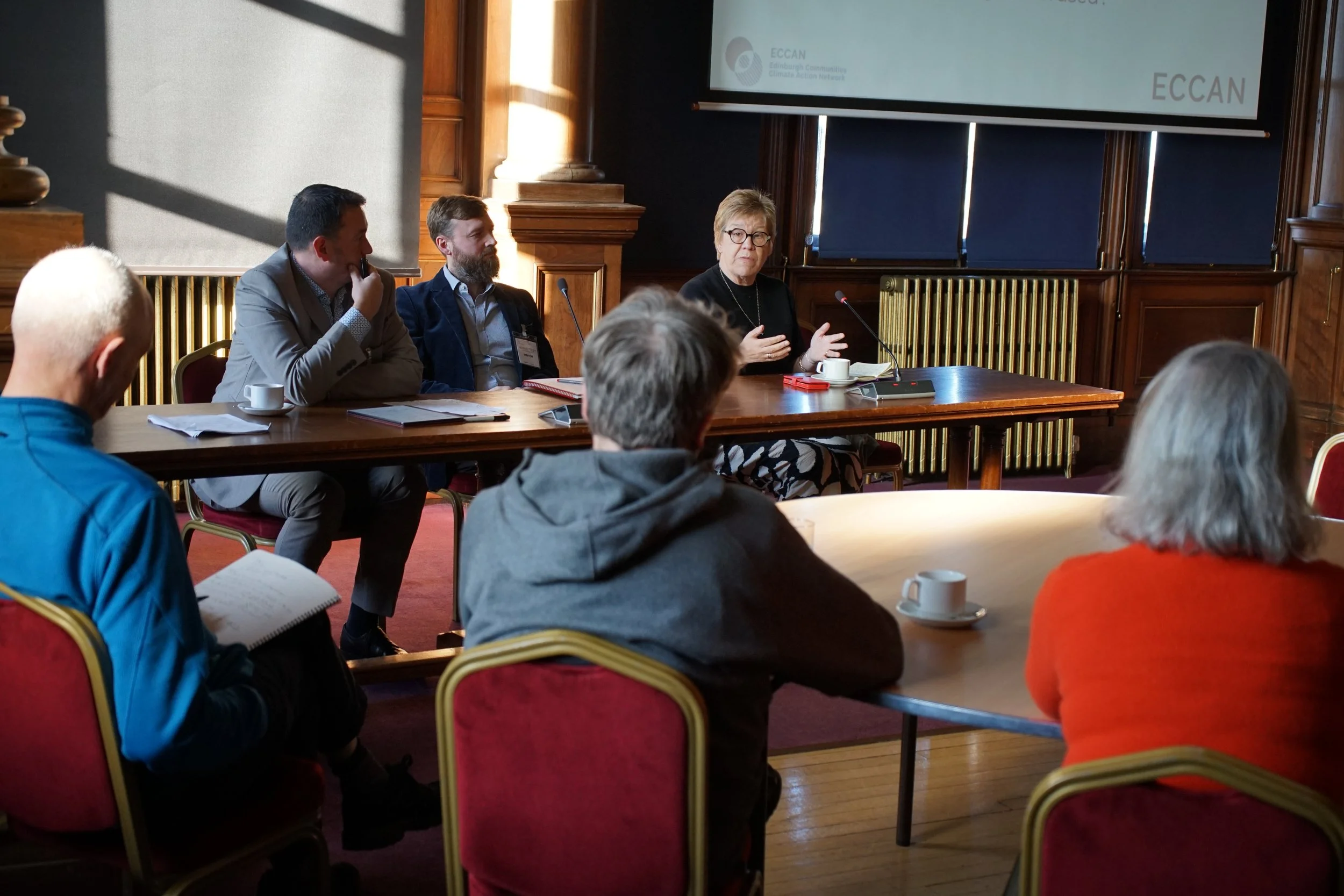
We then heard initial reflections from our panel: Dr Miles Weaver from Edinburgh Napier University, Aythan Lewes from Eala Impacts and Lesley Hinds, Chair of North Edinburgh Arts whose contributions opened up a wider conversation with those in the room.
A strong theme was the need to communicate the evidence within an Edinburgh and Scottish context. One suggestion was to develop an Edinburgh-focused emergency briefing, drawing on expertise from the city’s universities and local organisations to connect the science with clear local actions.
The discussion also considered how we communicate the urgency of the climate and nature emergencies without leaving residents feeling overwhelmed or powerless. Participants highlighted the importance of making positive work more visible, creating practical ways for residents to participate and continuing the conversation beyond a single screening.
A recurring question throughout the afternoon was: what happens next?
Participants called for stronger coordination between councillors, communities, universities and organisations already taking action across Edinburgh. Short funding cycles and political terms were identified as barriers to addressing challenges that require sustained work over many years.
Buildings, planning and transport were also discussed. Participants considered how Edinburgh can both reduce emissions and prepare for the effects of a changing climate. City Plan 2040 was highlighted as an opportunity to strengthen the role of net-zero building standards in future planning and development.
The conversation explored how well-connected neighbourhoods, shared spaces and reliable public transport could reduce the need for car journeys while supporting stronger local relationships. These relationships will be an important part of helping communities respond to future disruption.
Fairness and community ownership ran through the discussion. Climate impacts are not experienced equally across Edinburgh, and residents living in the most affected areas may have fewer resources available to adapt. Participants stressed the need to listen to these communities and ensure their experiences and priorities inform decisions.
The group also considered who will own and benefit from the infrastructure created through the transition to a lower-carbon economy. Housing associations, development trusts and other democratic community organisations were discussed as possible ways to keep more of those benefits within local communities.
Before closing, a practical suggestion emerged from the room: that the National Emergency Briefing could form part of the training offered to incoming councillors.
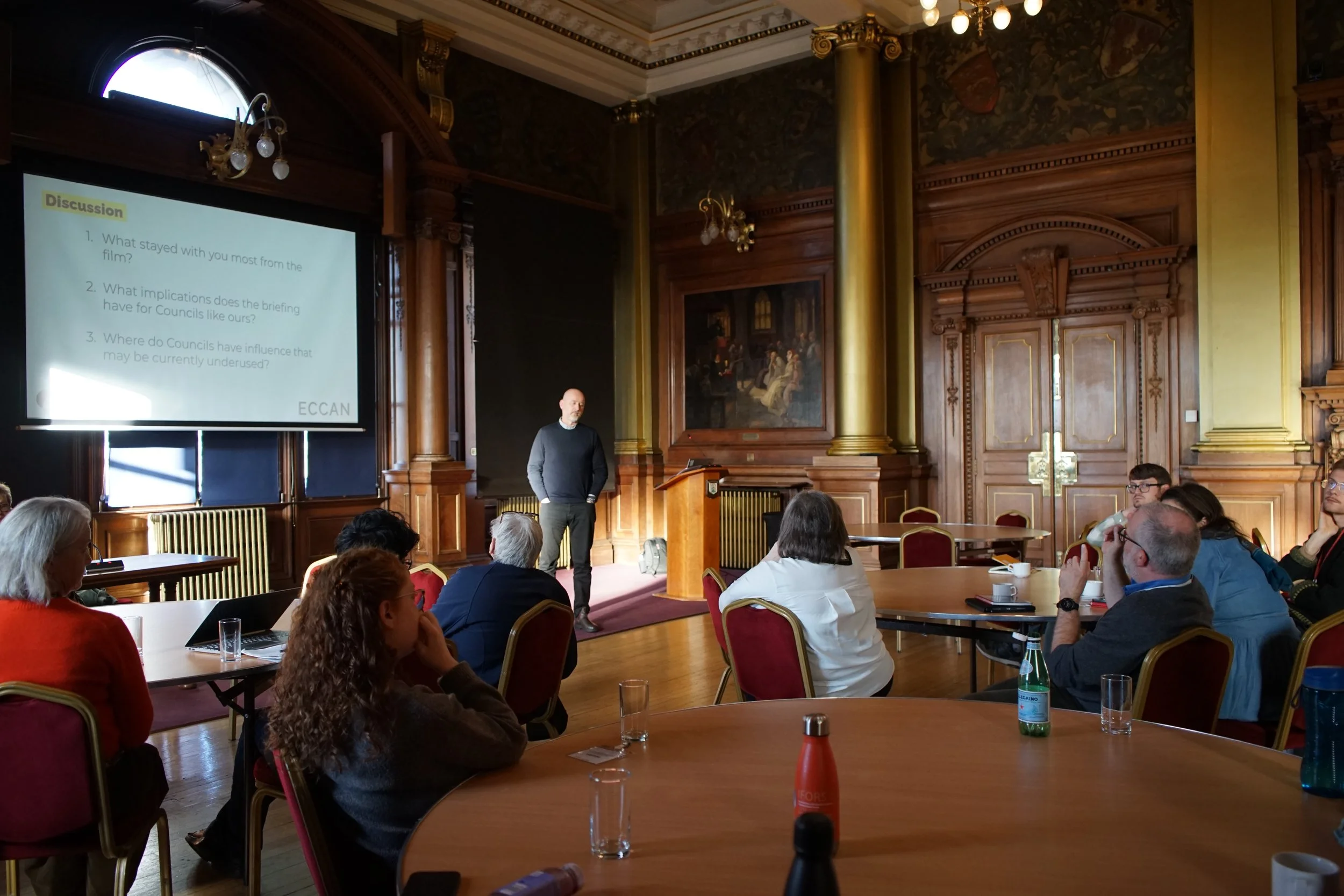
We ended the afternoon by bringing the different conversations back together and reflecting on the ideas raised. Those attending left with plenty to consider, including how we make the evidence locally relevant, connect existing work and turn discussion into coordinated action.
We were pleased to support this councillor-led initiative and help create space for an open and thoughtful conversation. Strengthening the connection between political decision-making and the knowledge, priorities and action of Edinburgh’s communities is central to our work, and we hope this marks the beginning of further conversations across the city.
Want to host a screening? ECCAN can support you. Get in touch and find out more about the National Emergency Briefing below.
Join our developing Policy Circle
We are developing an ECCAN Policy Circle focused on influencing the City of Edinburgh Council’s response to the climate and nature emergencies.
The circle will bring members together to identify shared priorities, raise community concerns and build constructive relationships with local decision-makers. This could include contributing to consultations, drafting letters and working towards achievable changes in local policy.
If you are interested in getting involved or would like to find out more, please get in touch.